May 7, 2021
Unprecedented Times
A steady rain falls as I jog to the front door of the food bank, only to be met with a keypad lock and a sign taped to the inside of the glass telling me to ring the bell. A masked woman sitting inside comes to the door and checks my temperature before welcoming me inside and handing me a signup sheet with blank spaces for my name, temperature reading, and time of entry.
More than a year ago, dozens of college students would flood nearly uninhibited into this building each week to volunteer. Now, those students have been replaced with National Guard members, and visitors are kept at a minimum to ensure social distancing.
The Food Bank of Northeast Georgia is just one of many organizations that works to fight food insecurity in Athens, and like so many others, it has not gone untouched by COVID-19.
When the pandemic hit in the early months of 2020, businesses across Athens closed both temporarily and permanently. Job loss and isolation became prevalent and the already high rate of food insecurity in the city increased. Programs and organizations that work to feed the community had to figure out how to support themselves under these new conditions while figuring out how to continue to serve the people who rely on them.
The New Normal
Now, over a year after the start of the pandemic, these organizations are still learning how to operate safely, and what were once temporary fixes have become the new normal.
“Next year we will have been open for 30 years; this has been the busiest year of our lives,” said Sherry Anderson, the Associate Director of Operations at the Food Bank of Northeast Georgia. Anderson told me that demand for food increased just as the food bank was forced to close its doors to volunteers.
To keep serving safely, the food bank had to find new ways to utilize pre-existing programs and resources.
Their mobile pantries, which were previously used by outside service groups and organizations for localized food distribution events, found temporary homes in underserved areas. When churches and other organizations were no longer able to safely operate the food distribution trucks, the food bank began operating one near downtown Athens to periodically help serve the ever-growing need for food in the community.
Through federal aid, National Guard members filled the gaps of volunteers who were now unable to safely lend their efforts, said Anderson.
The food bank also created an online food drive that allows donors to virtually shop for and fund food items. “We’ve been able to meet the demand, which we’re really happy about,” Anderson said.
Athens’ poverty rate is more than double that of the state of Georgia. This disparity has led many local businesses and organizations over the years to create their own missions to fight food insecurity.
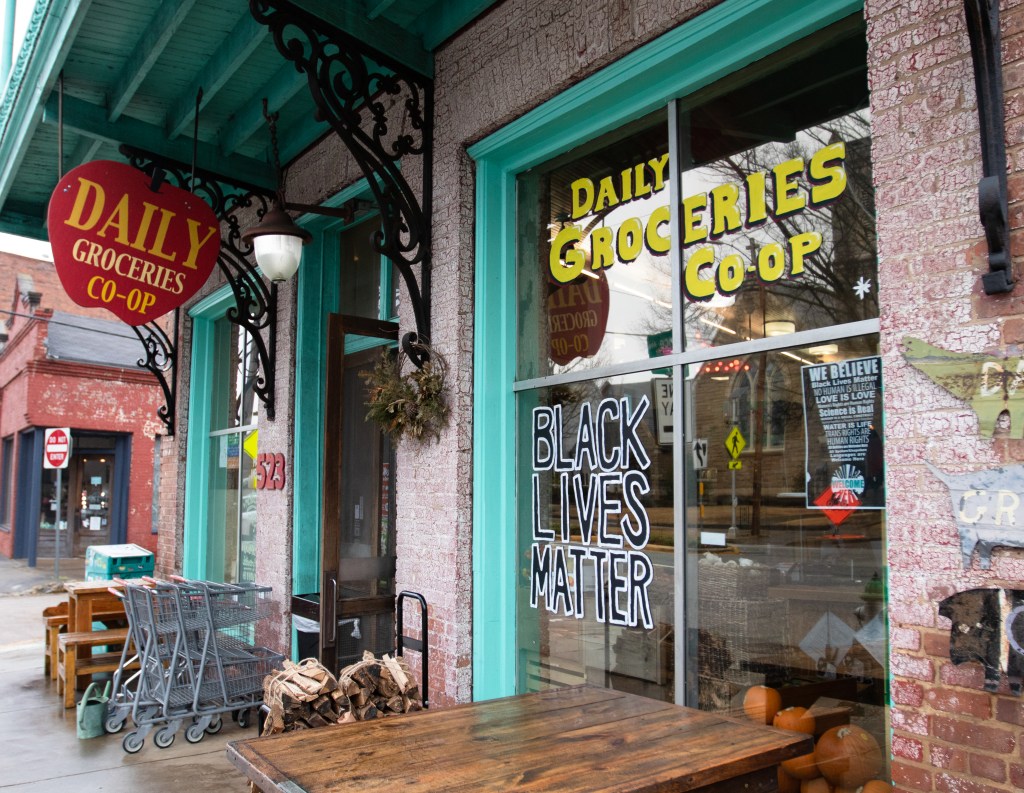
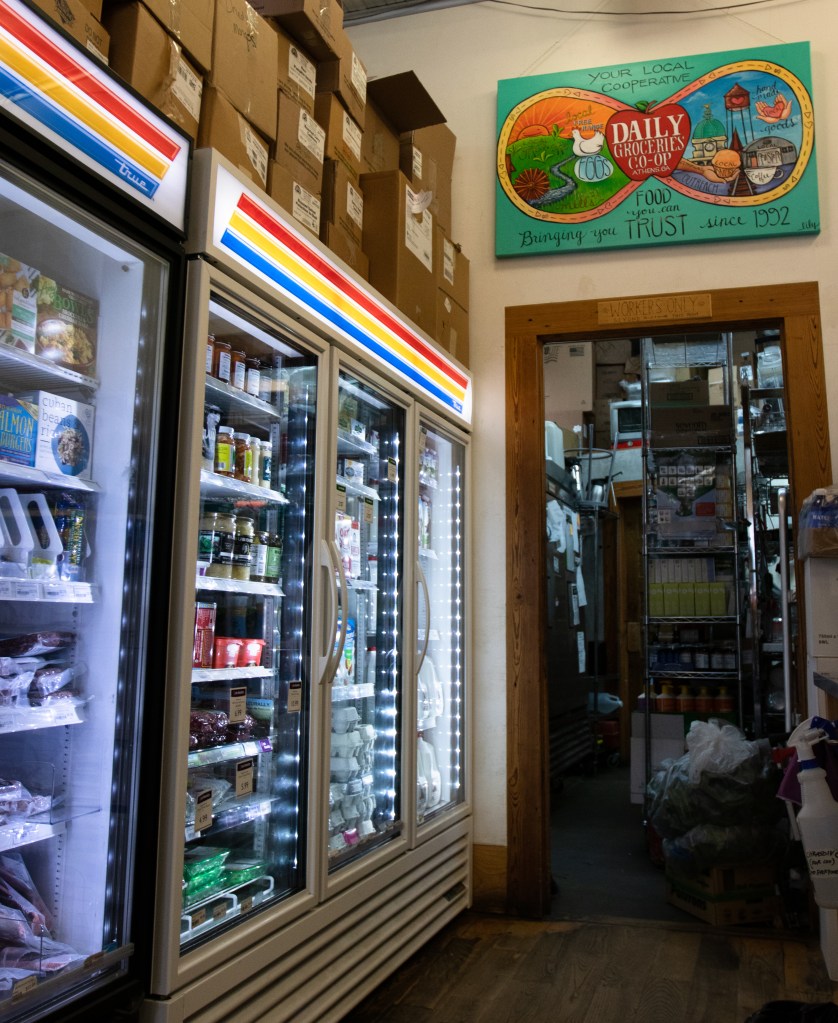
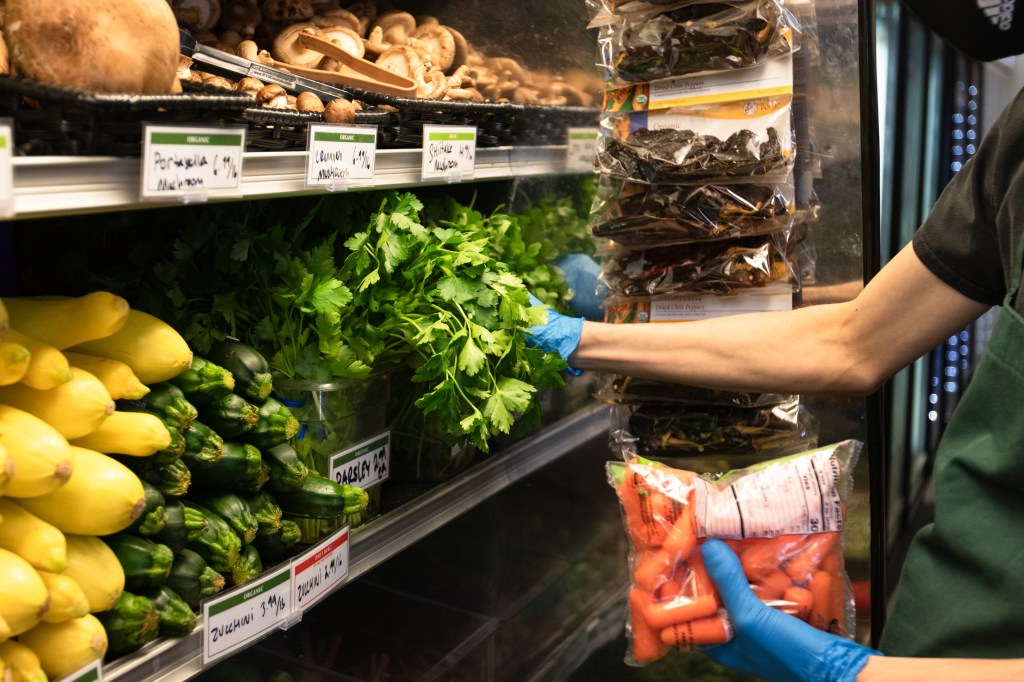
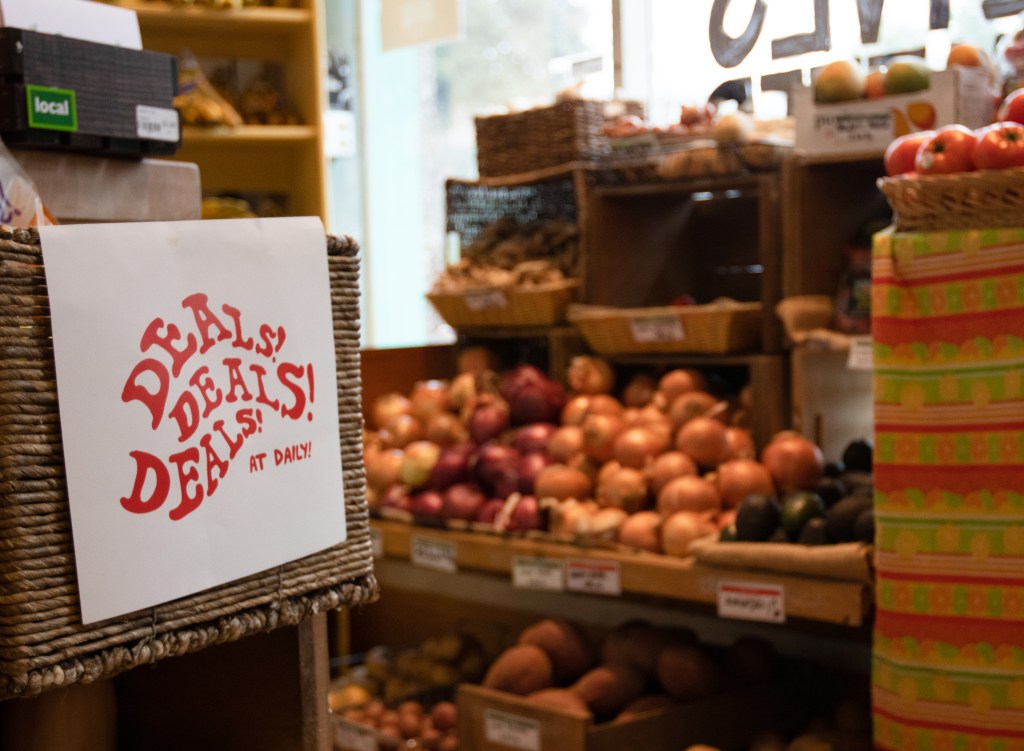
Daily Groceries Co-op has been dedicated to supporting the Athens community through food since 1992, and they have created several different outreach programs that strive to help many groups of underserved Athenians.
Kara Brown, manager of Daily Groceries, says that food security is their priority. With their Food For All program, Daily allows customers using EBT or SNAP to become owner-members at no cost. This provides shoppers with all the typical owner-member benefits, including a flat discount on everything in the store, plus an added 50% discount on local produce through Wholesome Wave Georgia’s Fresh for Less program.
These programs faced challenges when the pandemic forced Daily Groceries to close their store to in-person shopping, said Brown. Customers were still able to shop online and pickup their orders socially distanced, but programs that are funded through round-up at the register donations suffered as fewer transactions occurred. Brown is hopeful for a rebound in funding as the store has begun to allow limited in-person shopping again.
The Athens Farmer’s Market is a common place for locals to pick up fresh produce and local products, but they also offer a Food As Real Medicine prescription (FARM Rx) program that helps community members afford nutritious food. The program prescribes nutritious foods to low-income people suffering from diet-related illnesses to encourage and support healthy eating.
Last March, the market was unable to open for in-person shopping. Instead, they had to quickly pivot to a safe and socially distant model, which they are continuing this year to help ensure access to healthy and sustainable food sources. Mandatory masks and handwashing stations have become the new normal for Saturday shoppers.
Innovative Community Support
While many pre-existing organizations struggled to adapt to the restrictions brought by the pandemic, other community members saw new opportunities for service.
Jenna Dallow, President of Food 4 Lives Athens, said the pandemic finally gave her time to help expand the Atlanta-based organization.
“We knew that there needed to be a Food 4 Lives in Athens based on the need,” said Dallow. When COVID-19 caused Food 4 Lives Atlanta to shift their food supply method from one large kitchen to several family kitchens, Dallow saw an opportunity to take the organization to Athens. Now, each week families in surrounding cities cook vegetarian meals for the volunteers to pick up and distribute to homeless camps around Athens.
Next year, Dallow says she plans to upscale the operation and work full-time to provide food and support on a daily basis. For now, masked UGA student volunteers gather weekly in her kitchen or backyard and don gloves to package food before heading out to serve.
Despite socially distanced and virtual classes this year, University of Georgia students have found ways to come together and support the Athens community.
Farmer’s Market Friends, a UGA organization started by students Abraham Lebos and Reese Macmillan, has launched a Farm to Campus market that allows college students to stock up on fresh and local produce while supporting the Athens Farmer’s Market’s FARM Rx program through market proceeds.
Lebos said he hopes to use this program to help UGA students eat more nutritiously and sustainably while getting involved with food security programs in the community.
“I think food is community and it’s important to bridge that inequality gap to create a better community,” said Asha Noorullah, the Director of Philanthropy at Farmer’s Market Friends.
In many ways, COVID-19 has changed and challenged the ways we interact with our communities. From masked faces and locked doors to outdoor gatherings and empty classrooms, human connections look far different now than they did over a year ago. But despite the barriers between us, people all over Athens are finding innovative ways to continue or increase support for their community.
 Sarah White